
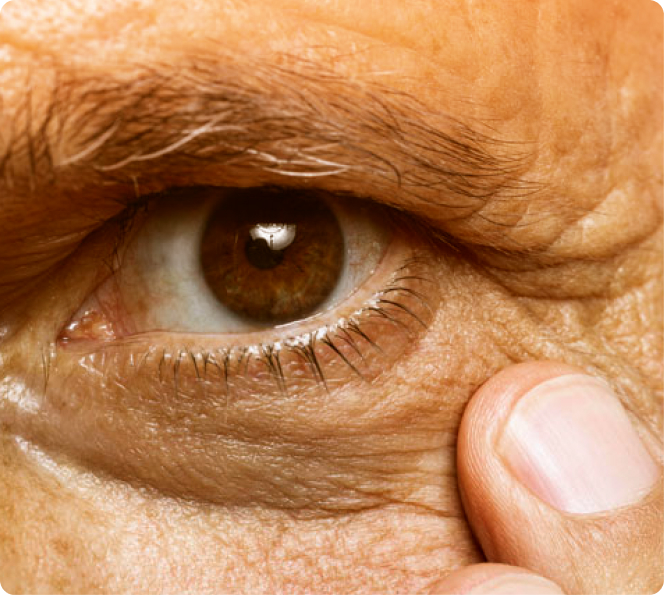



The macula is the part of your retina responsible for sharp, central vision—what you need for reading, driving, and seeing fine details.
A macular hole occurs when a small break forms in this area, leading to blurred or distorted vision. In more advanced cases, it can cause significant vision loss. While macular holes affect your sight, they do not cause pain.
What Causes Macular Holes?
The most common cause is age-related changes in the vitreous, the gel-like substance inside the eye. As the vitreous naturally shrinks and pulls away from the retina, it can sometimes tug too strongly, creating a hole. Fluid then seeps through the opening, further distorting central vision.
Other causes include:
Why Early Detection Matters
To confirm a diagnosis of myasthenia gravis, your doctor may recommend:
Neurological Exam:
Evaluation of muscle tone, strength, eye movements, balance, and coordination.
Edrophonium Test:
A short-acting medication (edrophonium chloride) that temporarily improves muscle strength in MG.
Blood Test:
Identifies antibodies that interfere with nerve-to-muscle communication.
Electromyography (EMG):
Measures how muscles respond to electrical stimulation.
Imaging (CT or MRI):
Detects thymus gland tumors or other abnormalities.
Lung Function Tests:
Assess breathing strength and lung capacity.
Tests
To diagnose a macular hole, your care team may perform:
Visual Acuity Test:
Measures clarity of distance vision.
Dilated Pupil Exam:
Allows a close look at the retina using light and magnification.
Optical Coherence Tomography (OCT):
Creates detailed, cross-sectional images of the retina.
Fluorescein Angiography:
Uses a special dye to highlight the eye’s blood vessels for imaging.
Not every macular hole requires immediate surgery, but many benefit from repair:
Vitrectomy Surgery: The most common treatment. The surgeon removes the vitreous gel and replaces it with a gas bubble, which acts as a temporary bandage to hold the macula in place. Patients typically need to remain in a face-down position for about a week to help the hole heal. Over time, the bubble dissolves naturally as the eye refills with fluid.
Why Choose Bascom Palmer Eye Institute?
A Trusted Leader
Pioneers in Care
Compassionate, Personalized Treatment
Specialized Surgical Suites
Full-Spectrum Care
At Bascom Palmer, our goal is simple: preserving and restoring your sight with the safest, most advanced treatments available.
FAQ
Questions? We’re here to help.
Our appointment specialists are ready to help you find what you need. Contact us today.