Prosthetic Eye Plastic Surgery
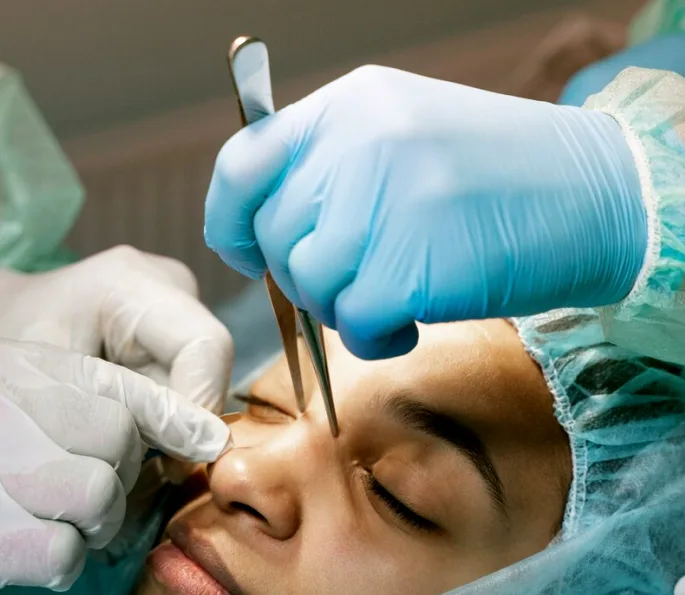
After eye removal surgery, many patients choose a prosthetic eye (sometimes called a glass or synthetic eye) to restore a natural appearance and protect the eye socket. At Bascom Palmer Eye Institute, part of the University of Miami Health System, our oculofacial plastic surgeons and on-site ocularist work together to provide safe, comfortable, and natural-looking results.
A prosthetic eye is a custom-made acrylic shell that closely resembles your natural eye. Details such as iris color, pupil size, and even fine blood vessels are carefully painted to create a realistic look. Most people find that others cannot tell the difference between their prosthetic and their natural eye.
Who Is a Candidate?
Anyone who has undergone eye removal surgery may be a candidate for a prosthetic eye. Most patients choose this option to feel more comfortable with their appearance and to support healthy socket healing.
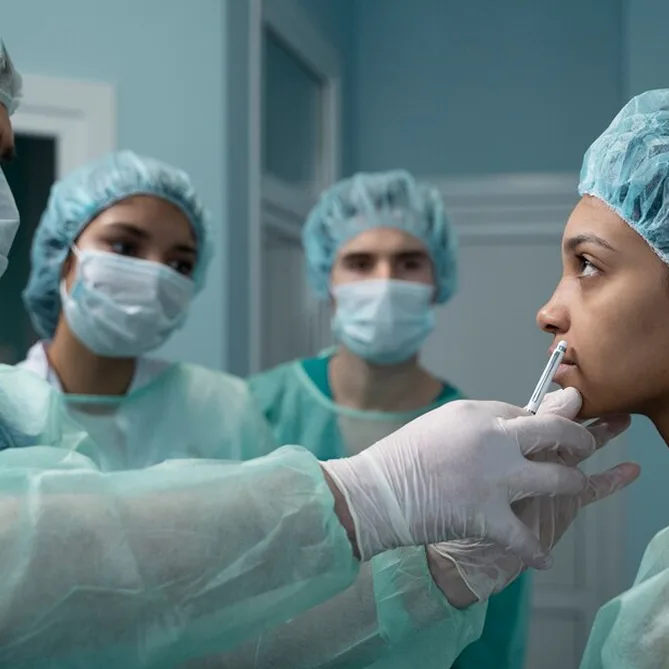
What to Expect
Orbital Implant Placement
At the time of surgery, your surgeon places an orbital implant (a small sphere) deep into the socket to replace lost volume. These implants are typically made of porous polyethylene, hydroxyapatite, or acrylic plastic. The eye muscles may be attached to the implant to allow for natural movement.
Prosthetic Fitting
About five weeks after surgery, once swelling has resolved, our on-site ocularist takes an impression of your socket. The prosthetic eye is then hand-painted to match your natural eye. This process usually takes several days.
Long-Term Care
Because the socket can change over time, adjustments may be needed weeks, months, or even years later. Most patients need a new prosthesis every five years as materials naturally wear down.
- Regular follow-up with your ocularist and oculofacial surgeon every six months is essential for cleaning, polishing, and checking socket health.
- With proper care, patients enjoy a comfortable fit and excellent cosmetic results for many years.

Addressing Socket Problems
Some patients may experience complications after eye removal, such as:
- Drooping of the lower eyelid
- Hollow or sunken appearance
- Scarring inside the socket that makes wearing a prosthesis difficult
Our surgeons offer reconstructive procedures to correct these issues, restore comfort, and achieve a pleasing, natural look.
Why Choose Bascom Palmer Eye Institute?
Ranked #1 in the Nation
- Recognized by U.S. News & World Report as America’s top eye care facility.
Expert Surgical and Prosthetic Care
- Our surgeons are fellowship-trained in oculofacial plastic and reconstructive surgery, and we have an ocularist on-site to design, fit, and maintain prosthetic eyes.
Compassionate Support
- We understand this journey is both medical and emotional. Our team provides not only expert care but also reassurance and guidance every step of the way.
FAQ
What is a prosthetic eye?
When is prosthetic eye surgery needed?
How is the prosthetic eye fitted and maintained?
Does it hurt, and what's recovery like?
Can I still see with a prosthetic eye?
Our Doctors
No doctors available for this speciality.

Questions? We’re here to help.
Our appointment specialists are ready to help you find what you need. Contact us today.