Reconstructive Surgery

Reconstructive surgery can improve both the function and appearance of your eyes, eyelids, and upper face. Injuries, congenital defects (present at birth), aging changes, and tumors can lead to pain, permanent eye damage, vision loss, or cosmetic concerns.
At Bascom Palmer Eye Institute, our experienced surgeons offer advanced reconstructive procedures to restore comfort, vision, and natural appearance.
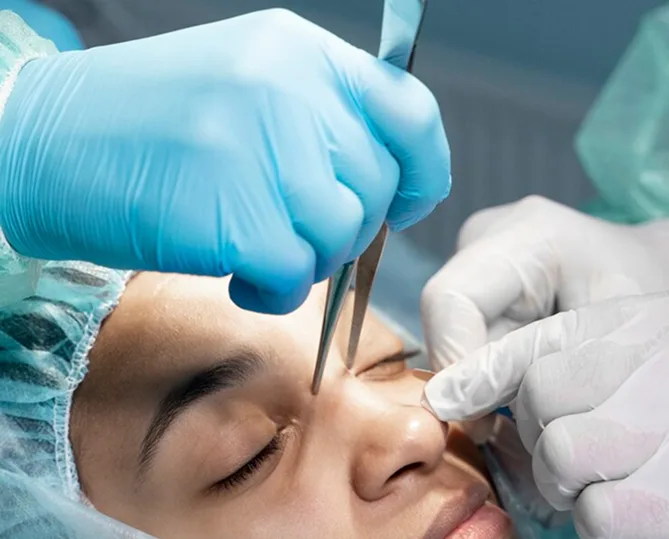
What Procedures Are Offered?
Our surgical options include:
Correcting eyelid position problems: Fixing eyelids that turn inward (entropion) or outward (ectropion)
Lower eyelid support: Inserting implants to raise drooping lower eyelids due to aging or thyroid eye disease
Eyelash removal: Permanently removing eyelashes that irritate the eyes
Orbital reconstruction: Rebuilding eye sockets after eye removal for patients unable to comfortably wear a prosthetic eye due to scarring
Eyelid reconstruction: Repairing eyelids after trauma or skin cancer removal
Tumor removal: Eliminating benign or malignant growths on the eyelids or facial skin
What to Expect
Anesthesia
Depending on the procedure, surgery may be performed under local anesthesia, local anesthesia with intravenous sedation, or general anesthesia.
Recovery
Most patients return home the same day. Your surgical team will provide detailed instructions for post-operative care and answer any questions about your recovery period.
Who Is a Candidate?
Reconstructive surgery may be recommended if you have any of the following:
- Misdirected eyelashes touching the eyes
- Blepharospasm or hemifacial spasm (involuntary eyelid or facial muscle spasms)
- Brow ptosis (drooping eyebrows)
- Dermatochalasis (excess eyelid skin and fat)
- Eyelid cancer
- Fractures or lacerations around the eyes
- Graves’ disease / thyroid eye disease
- Nutritional & Toxic Optic Neuropathies
- Orbital tumors (behind the eyes)
- Tear duct blockage with excessive tearing
- Trauma requiring eye removal
Why Choose Bascom Palmer Eye Institute?
#1 in the Nation
- Ranked by U.S. News & World Report as the top eye care facility in the U.S., Bascom Palmer provides the highest level of care in a compassionate setting.
Multidisciplinary Expertise
- Our surgeons work alongside ophthalmologists, oculoplastic specialists, and other medical professionals to address the complex needs of your eyes, eyelids, and face.
Comprehensive Care
- From initial evaluation to surgery and recovery, your care team ensures both your vision and appearance are optimized.
FAQ
What types of eye damage does reconstructive surgery address?
How has reconstructive eye surgery evolved with new techniques?
What is the typical process for an eye reconstructive procedure?
What recovery tips maximize outcomes after reconstructive surgery?
Are there risks, and how are they managed in reconstructive eye surgery?
Our Doctors
No doctors available for this speciality.

Questions? We’re here to help.
Our appointment specialists are ready to help you find what you need. Contact us today.