

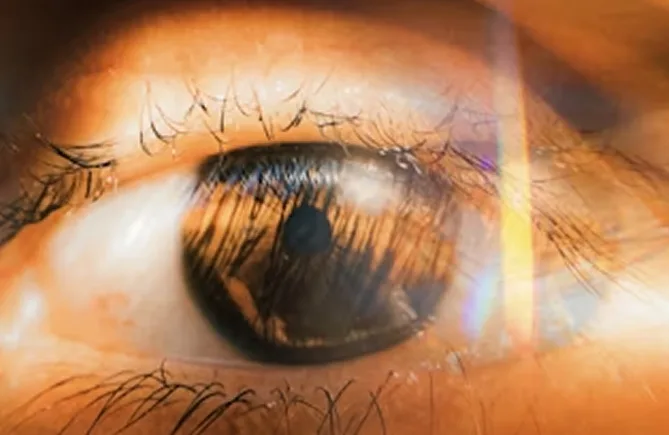


Retinitis pigmentosa (RP) is a progressive retinal disorder that affects your eye’s ability to sense light. The retina, located at the back of your eye, contains millions of light-sensitive cells that send visual information to your brain. RP damages these cells over time, leading to permanent vision loss.
While RP often runs in families, about 50% of cases have no known family history. Symptoms usually appear in childhood or adolescence, though they can develop later in life.
There is currently no way to prevent RP, but protecting your eyes from ultraviolet (UV) light by wearing sunglasses outdoors may help delay symptom onset.
People with RP often experience:
Early detection and monitoring are important to manage the condition and maximize remaining vision.
At Bascom Palmer Eye Institute, our retinal specialists use advanced diagnostic tools to confirm RP and monitor its progression:
A thorough examination of the retina and surrounding eye structures. Pupils are often dilated for better visualization.
Determines if you have difficulty perceiving colors, using tests like multicolored dot patterns or color chips.
Direct ophthalmoscopy shines a light through the pupil to view the retina, while indirect ophthalmoscopy provides a detailed 3-D view.
Uses sound waves to produce detailed images of the eye and surrounding structures.
Measures the electrical response of your retina’s light-sensitive cells to assess retinal function.
Currently, there is no cure for RP, and treatment cannot stop disease progression. However, several strategies can help patients make the most of their remaining vision:
Low Vision Aids: Magnifiers, special glasses, and other adaptive tools support daily activities.
Retinal Prosthesis (Argus II System): In advanced cases, a surgically implanted device delivers electrical stimulation to the retina, partially restoring visual perception.
Ongoing Research: Bascom Palmer’s Retinal Degeneration Center investigates potential therapies, including gene therapy and neurotrophic factors, aimed at slowing progression or restoring vision.
Why Choose Bascom Palmer Eye Institute?
Nation’s Top Eye Care Provider
Leading Specialists
Compassionate, Patient-Centered Care
Research-Driven Treatments
Fast, Accurate Diagnosis
RP affects approximately 1 in 3,000 people, making specialized care and monitoring essential for preserving vision.
FAQ
Our Doctors
No doctors available for this speciality.
Questions? We’re here to help.
Our appointment specialists are ready to help you find what you need. Contact us today.