Strabismus (Misaligned Eyes)

Strabismus is a condition in which both eyes do not point in the same direction. Approximately 4% of the U.S. population is affected. While it may run in families, strabismus can also be associated with conditions such as cerebral palsy, Down syndrome, hydrocephalus, or brain tumors.
Types of Eye Misalignment
Esotropia: Eyes turn inward. Subtypes include infantile esotropia, accommodative esotropia (related to farsightedness), and sixth nerve palsy.
Exotropia: Eyes turn outward.
Vertical misalignments: Eyes are misaligned up or down.
Strabismus can develop in children and adults, and in most cases, proper treatment can improve eye alignment.
Symptoms of Strabismus
- Decreased vision
- Double vision*
- Impaired depth perception
- Difficulty reading
- Headaches
*Sudden double vision may indicate a more serious neurologic condition. Seek immediate medical attention if this occurs.
Tests for Strabismus
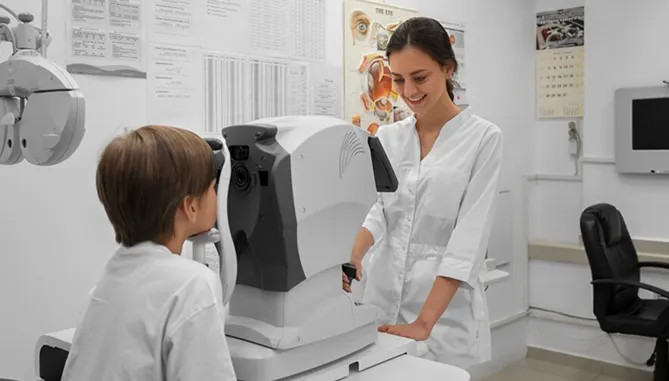
A complete eye exam is the first step in determining the severity and best treatment. Testing may include:
Visual Acuity
Reading letters (or pictures for very young children) to assess vision.
Motility Exam
Checking eye alignment and muscle function.
Refraction
Using corrective lenses to determine the appropriate prescription for nearsightedness, farsightedness, or astigmatism.
Treatments
Eyeglasses or Contact Lenses: Special lenses can help straighten the eyes in some cases.
Prism Lenses: Prescription glasses with prism power can improve alignment.
Patching: Covering the stronger eye for a few hours each day forces the weaker eye to work harder, improving vision and alignment over time.
Medications: Atropine eye drops can temporarily blur vision in the stronger eye, helping the weaker eye strengthen.
Eye Muscle Surgery: If other treatments are insufficient, surgery can weaken or strengthen eye muscles to realign the eyes. Early surgery is most successful in establishing binocularity – the ability of both eyes to focus together to create a single image.
Why Choose Bascom Palmer Eye Institute?
Nation’s #1 Eye Care Provider
- Bascom Palmer Eye Institute, part of the University of Miami, is recognized for leading-edge research and advanced treatments for eye disorders. U.S. News & World Report has ranked us Number One in America 16 times.
Compassionate Vision Care
- We understand that eye disorders can be challenging. Our team provides guidance, support, and personalized care to help you or your child navigate treatment successfully.
Pediatric Eye Specialists
- Early intervention is key to preventing permanent vision problems. Our pediatric ophthalmologists are highly trained in diagnosing and treating the youngest patients to achieve the best possible outcomes.
FAQ
What is strabismus, and how does it impact everyday life?
What causes strabismus in children versus adults?
How is strabismus diagnosed, and what tests are involved?
What are the treatment options for strabismus?
Can strabismus be prevented, and what does long-term management look like?
Our Doctors
No doctors available for this speciality.

Questions? We’re here to help.
Our appointment specialists are ready to help you find what you need. Contact us today.