Types of Specialty Contact Lenses
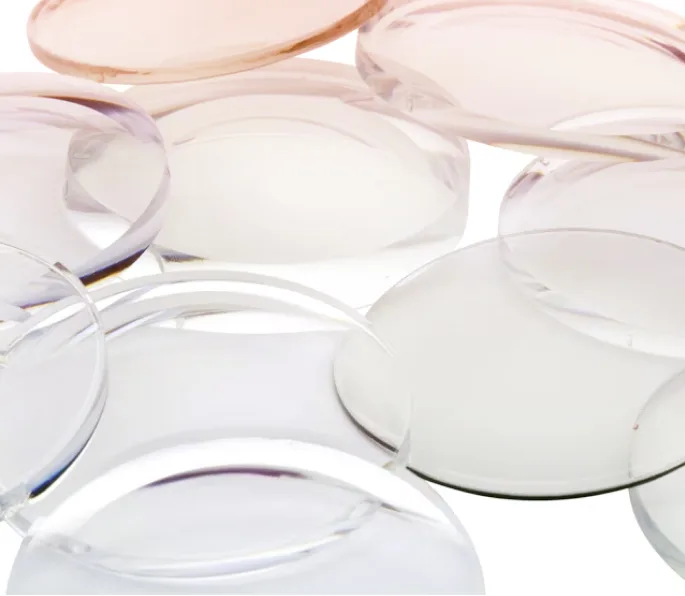
At Bascom Palmer Eye Institute, we specialize in custom-fitted specialty contact lenses to address complex vision needs that cannot be corrected with standard lenses. We offer three main types:
- Scleral lenses (including PROSE treatment, image-guided lenses, and impression-based lenses)
- Rigid gas-permeable (RGP) lenses
- Hybrid lenses

Scleral Lenses
Scleral lenses are large-diameter, hard, breathable lenses that rest on the white part of your eye (the sclera), rather than the cornea.
Benefits:
- Can be filled with sterile saline solution to continuously lubricate the eyes, effectively treating severe dry eye.
- Vault over the entire eye, creating a smooth optical surface for hard-to-treat vision problems.
- At Bascom Palmer, we provide several types of scleral lenses, including PROSE, image-guided, and impression-based lenses.
PROSE Treatment
PROSE (Prosthetic Replacement of the Ocular Surface Ecosystem) is a highly customizable scleral lens for complex cases, such as:
- Chronic dry eye
- Keratoconus
- Graft-versus-host disease
- Stevens-Johnson syndrome
Process
- Consultation to discuss concerns and goals
- Imaging and trial lens fitting
- Custom lens design using specialized PROSE software
- Follow-up adjustments to ensure optimal fit and comfort
Benefits
- Improved vision and comfort
- Less fogging
- Team-based, collaborative approach with fellowship-trained providers
- Bascom Palmer is one of only 15 providers in the U.S., and the only provider in Florida, offering PROSE treatment
Image-Guided Scleral Lenses
- Use advanced SMap3D™ imaging to capture the unique shape of your eyes
- Young patients with C–E graded tumors benefit from reduced systemic side effects.
- Typically requires 2–3 treatments spaced three weeks apart.
- Only ~5% fail to respond; additional local injections can target remaining cancer cells in the eye.
Impression-Based Scleral Lenses
- Created using EyePrintPRO, a device that takes detailed impressions of your eyes
- Ideal for patients who are visually impaired or have challenging eye shapes
- The impressions are used to 3D-print highly customized lenses
Other Specialty Lenses
Rigid Gas-Permeable (RGP) Lenses
- Hard lenses that sit directly on the cornea
- Allow oxygen to pass through, keeping eyes healthy
- Provide sharper vision, particularly for astigmatism
- May feel firm initially, requiring an adjustment period
Hybrid Lenses
- Combine the vision benefits of RGPs with the comfort of soft lenses
- Hard gas-permeable center with a soft outer skirt
- Larger diameter than RGPs
- Can include multifocal or prism options for specific vision needs
Additional Features
Multifocal lenses
Multiple prescriptions in one lens (near and far)
Prism correction
Available for scleral lenses to help with double vision
Getting the Right Fit
Uveitis is a general term for inflammation inside the eye, which can affect different parts of the eye, including the iris, retina, or choroid. Depending on the location of inflammation, it may be called:
SMap3D™ technology: Maps the corneo-scleral surface for precise lens design
Eaglet Eye: Captures detailed measurements to support faster and more accurate fittings
FAQ
What are the different types of specialty contact lenses, and why choose them over standard ones?
When would someone need scleral lenses, and how do they work?
What are hybrid and prosthetic specialty lenses used for?
How do orthokeratology lenses help with myopia control?
Are there drug-eluting or multifocal specialty lenses, and what benefits do they offer?
Our Doctors
No doctors available for this speciality.

Questions? We’re here to help.
Our appointment specialists are ready to help you find what you need. Contact us today.