
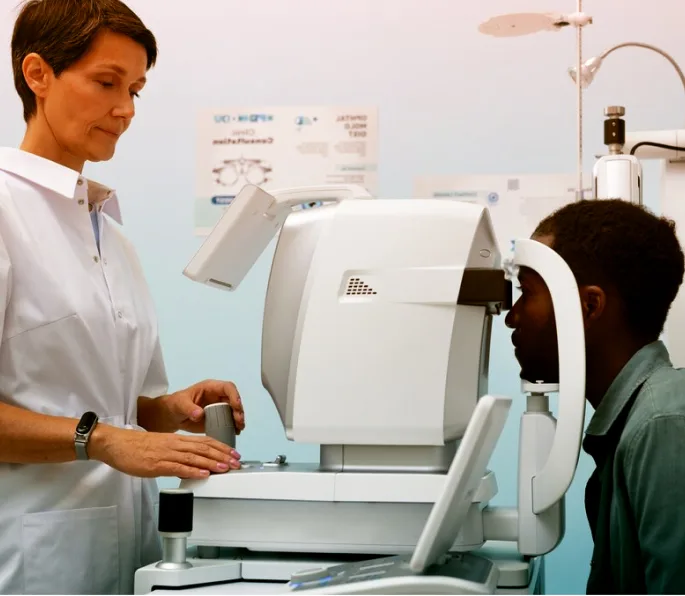
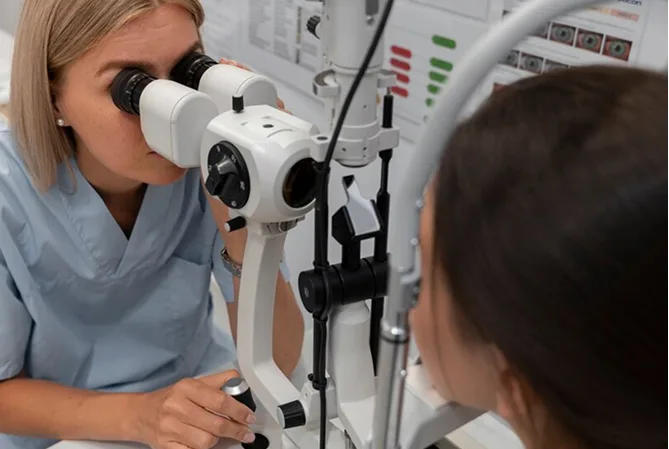
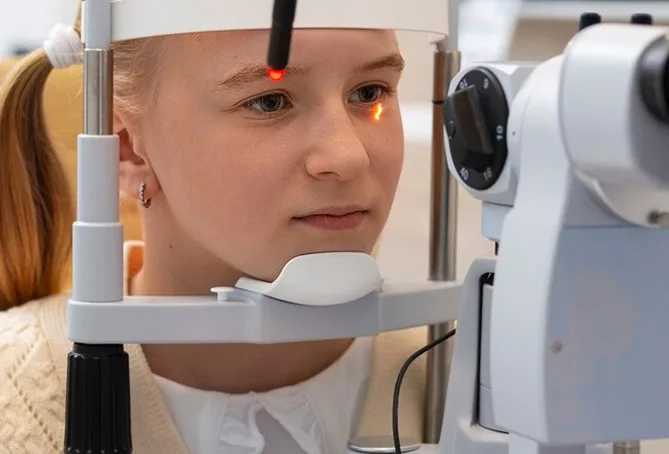


Visual electrophysiology encompasses a variety of specialized tests used to assess the function of your eyes and the visual pathways to your brain. These tests are especially helpful when other diagnostic methods cannot determine the cause of vision problems.
At Bascom Palmer Eye Institute, part of the University of Miami Health System, we offer the following visual electrophysiology tests:
Full-field Electroretinogram (ffERG): Measures the electrical activity of all retinal cells in response to light flashes.
Multifocal Electroretinogram (mfERG): Assesses local electrical activity in the central retina.
Visual Evoked Potentials (VEP): Measures the brain’s response to visual stimuli:
SWEEP Visual Evoked Potentials (SWEEP VEP): Objectively assesses vision in pre-verbal or non-verbal children using varying sizes of checkerboards.
Electrooculogram (EOG): Evaluates the outer retinal cells and retinal pigment epithelium function.
Contrast Sensitivity Function (CSF): Tests the ability to detect differences in light and dark.
Farnsworth Color Tests: Measures color vision:
Preferential Looking Techniques (PLT): Measures vision in children or patients who cannot verbally respond.
15–90 minutes, depending on the test and patient needs.
Most tests allow you to go home the same day.
Some tests require dilating your pupils with eye drops.
Infants and young children may need sedation or general anesthesia for certain tests.
Bring your glasses and sunglasses. Some tests may cause temporary light sensitivity.
Your ophthalmologist will explain which specific test is best for your condition.
Patients with unclear vision problems that other tests cannot diagnose
Young children or non-verbal patients who cannot provide feedback about what they see
Why Choose Bascom Palmer Eye Institute?
Ranked #1 by U.S. News & World Report
Advanced Technology
Expert Team
FAQ
Our Doctors
No doctors available for this speciality.
Questions? We’re here to help.
Our appointment specialists are ready to help you find what you need. Contact us today.